
 There are many reasons why I strongly dislike Artificial Intelligence (AI). Here are a few of them:
AI lacks some of the fundamental components that comprise intelligence, so much so that even calling it ‘intelligence’ is deeply misleading. Intelligence is more than the ability to perform computations at speed or to scrape opinions and information from the internet and regurgitate them. Real Intelligence (RI) includes the ability to apply criteria such as morality to information and its use. Artificial Intelligence has no morality. It does not differentiate between good and bad, truth and lies. It has no concern for how the information it gathers is used. It doesn’t care if it's working for an altruistic surgeon or an amoral crook. When asked a question, it doesn’t care if the answer it gives is true or false. This is because caring is not amenable to being computer-coded. It is a part of being human that has developed over millions of years of evolution. Computers don’t care because they can’t care.
 AI can, however, be programmed to sound as though it cares. This makes it even more dangerous. I heard a news report the other day about a 13-year-old girl who developed what she thought was a close, trusting, supportive relationship with an AI chat-bot. As an adolescent, she was prone to emotional ups and downs. During one of the downs, her chat-bot ‘friend’ magnified her depression until she became suicidal, then supported her desire to kill herself, then helped her find the means to do so. It did these things because, as said, AI has no morality. It doesn’t care. It lacks the ability to care. Why should we expect a collection of electronic data to care about a human being? And yet the people who program chat-bots and release them into the world expend a great deal of time and energy to give their products a semblance of caring, of humanity. Certainly enough to fool a vulnerable child, teenager or adult. If that person dies as a result of their interaction with the AI chat-bot, the chat-bot doesn’t care because it can’t. However much it’s creators strive to persuade us it’s human, it’s still just a piece of emotionless software.
As well as assisting suicides, AI chat-bots are linked to several murders, including mass shootings, the perpetrators of which are advised by chat-bots on the best tactics to employ and weapons to use to inflict maximum casualties. A lawyer in a case involving a mass shooting at Florida State University on April 17, 2025 says that if ChatGPT were a person, it would be charged with murder for aiding and abetting the killing of two people and the wounding of seven others. ChatGPT was involved in another mass shooting on February 10, 2026 in Tumbler Ridge, British Columbia. There, an 18-year-old killed two family members at home and five children and an educator at a secondary school, gravely wounded another child and left dozens of people injured and traumatised before taking his own life. In this case, ChatGPT’s own internal systems had flagged serious concerns about the young man’s obsession with guns and extreme violence but the company chose not to alert the authorities to those concerns. The ChatGPT-bot itself having no morality, these systems are in place to monitor its interactions but are of no use whatsoever if the operating company then chooses to ignore their own monitoring staff’s warnings.
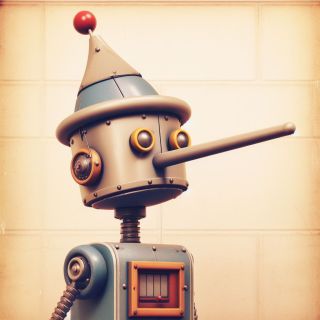 As well as having no ability to tell, or interest in, whether the information it provides is helpful or harmful, AI has no criteria by which to judge whether it is true or false. On the two occasions I accidentally clicked the AI button in a search engine the answers it provided were patently, obviously and ridiculously wrong. This may seem trivial compared to suicide and murder but, in a world where we are continually fed lies by politicians, advertisers and online ‘influencers,’ the last thing we need is a ubiquitous piece of software taking control of our internet searches, multiplying and spreading this false information.
Despite AI’s obvious flaws, it is now being inserted into search engines as a matter of course whether we want it or not. In many cases, it is now necessary to opt out of AI use every time you use some search engines. This is annoying.
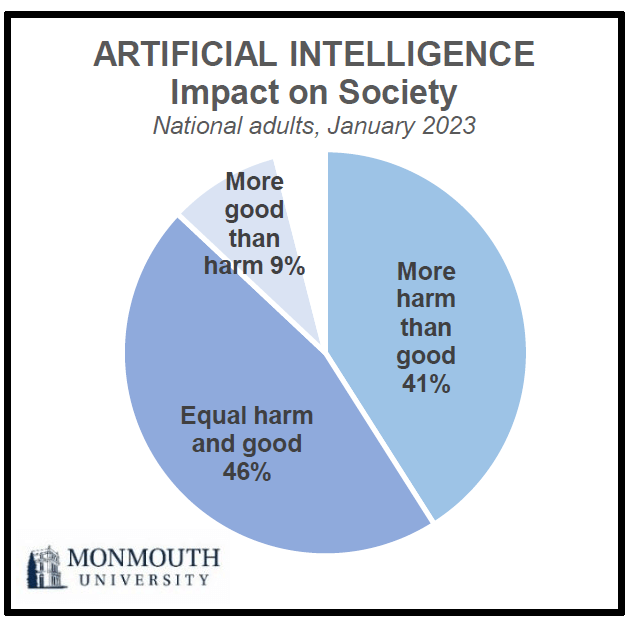 AI is being inserted into more and more software, again whether we want it or not. Again, it is often necessary to actively opt out from it if you don’t want it and there is no option to download a version that is free from AI.
How long will it even be possible to opt out of AI use? How long before it simply operates in the background of our lives without our even being aware of its presence? AI is being foisted on us by tech giants, software developers and governments who have never bothered to ask those of us who use their products and services whether we want it or not, and many of us don't. Despite which, not having it is simply not an option. They shove it down our throats anyway.
This might be less of an issue if there were some way to remove AI from our systems, but there isn’t. Surely it’s possible for someone to come up with an open-source AI killer that can remove this junk from our software if we don’t want it. But no such software exists. Why not?
 Meanwhile, people are using to AI to cobble together books on every subject under the sun to sell on outlets like amazon. You can often spot AI-generated books because of the hideous graphics on their covers, the terrible fonts used and the fact that, whatever the subject, they all seem to be written by supposed ‘doctors’ who frequently share the same name. As AI becomes more efficient, it will no doubt be harder to spot its products. However, given the way AI is programmed to function, it is highly likely that the entire contents will still be plagiarised from genuine authors’ legitimate work. I hope no one is ever fooled into buying this garbage, but I fear some already are.
In music too, AI makes it possible for people with no discernible talent to appear to have some musical ability by stealing the work of others who have genuine talent. It’s hard enough to make a living as a musician these days without some talentless, AI-using hack stealing your ideas and passing them off as their own.
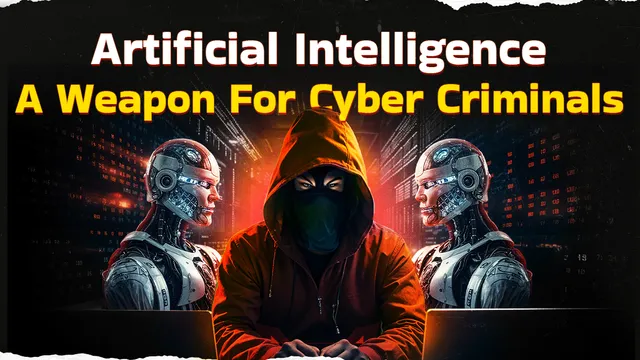 Criminals have been quick to make use of AI. I have received several phone calls from a ‘woman’ who is obviously an AI-bot. ‘She’ claims to represent a company offering home improvement grants. When ‘she’ asks for details about me, I refuse to give them – you should never, ever give out personal details to cold callers – and ask if there is a website where I can find information about these ‘grants.’ ‘She’ then hangs up. Back-tracing the calls, they all come from different mobiles. The mobile numbers turn out to belong to real people in various parts of the country. The AI-bot clones their numbers and uses them for fraudulent purposes without their knowledge. Again, this happens because, and I can’t stress this enough, AI has no morality. It doesn’t care whether it's used by criminals or philanthropists. It has no way to differentiate between the two nor any interest in doing so. This is not intelligence. This is stupidity in the extreme.
AI’s ability to clone phone numbers and generate sort-of-realistic-sounding voices will certainly be employed to influence elections. The Putin administration in Russia is strongly interested in destabilising the west. This is why it used social media to support both the right-wing Brexit campaign in Britain and Donald Trump’s election as president in the USA.
 AI is also being used to plan and execute major cyber attacks against companies, institutions and government departments, including denial-of-service and ransomware attacks. Such attacks often originate in Russia, although it is hard to judge the extent to which the criminal gangs involved are either supported or tolerated by the Putin administration. That said, similar criminal gangs exist in most countries. AI has made their work so much easier.
 Then there’s the use of AI in warfare. Now it is not only possible for wars to be fought almost entirely by drones so that no soldier ever directly confronts an enemy, those drones can now be controlled by AI so that no human need be involved in an attack at all, except as a victim of it. That way, no individual can be held to account for killing and maiming innocent civilians. Hooray! No more Bloody Sunday enquiries. More Bloody Sundays of course, just no enquiries after the event.
 AI is also being weaponised by governments against their citizens. AI is a wonderful tool for government surveillance. From monitoring video cameras in public and private places to tapping phone calls and intercepting and reading emails, AI’s ability to spy on us is virtually unlimited. This might be OK if you’re more frightened of terrorists than of your own government, not so good if you are, say, a trades union member or official, a human or other animal rights campaigner, an eco-activist, a journalist, active in any kind of politics, libertarian cause, LGBTQ+ community support or ‘fringe’ religion, a musician, artist or writer. The list of groups and individuals that governments are so afraid of as to want to surveil them can be extended almost indefinitely. Governments are, by their nature, paranoid, often because they are doing things of which those they seek to rule would not approve if they found out about them.
 Last but not least, there is the fact that AI requires vast data centres that consume energy like there’s no tomorrow, which there may not be if we continue to allow ourselves to be railroaded down the AI route. In 2024, AI data centres accounted for 1.5% of the world’s total energy use, or around 415 terawatt hours (TWh). That’s roughly equivalent to the energy usage of 150 million human households in industrialised countries. By 2030, AI energy consumption is expected to rise to at least 3% of global energy use and probably more. At a time when we are supposed to be cutting back our energy use in order to allay the worst effects of global warming, it shows a staggering lack of Human Intelligence (HI) to be building homes for AI that use as much energy in a year as 150 million homes for human beings. This too is stupidity in the extreme.
 Those of us who care about these things need to fight back against the companies and governments who are forcing AI upon us before it’s too late. OK, it may already be too late, but let’s hope not. How can we do this? Well, here are some sites that suggest potentially useful things we can do:
https://togetheragainstai.com/
https://www.geekwire.com/2025/ai-con-hold-back-hype/
https://www.nesta.org.uk/feature/future-signals-2024/artists-fight-back-against-ai/
https://bristoluniversitypressdigital.com/view/journals/gpe/4/2/article-p185.xml
There is another page link below that I am ambivalent about but is still worth a look. It advocates for activists to use AI for good and cites cases where this is already being done. It does, however, admit that there’s a massive imbalance between the good actors using AI and the bad. I’m still for opposing the damn thing altogether, but that’s just me. We all need to make up our own minds on this issue that has the power to impact all our futures, whether for good or ill.
Good luck, humanity, but hopefully not goodnight,
Greywolf /|\

 One thing I love about
  attractive and easy to navigate so just leave it as it is. One click toggles you to the neat mini-player mode that displays just cover art, artist name, track title, volume control and basic navigation.
  OK, that’s my top two picks for playing music. How about making music? The genius creators who make fully free, open source software have us well covered there too.
 I’ve used a lot of recording software, from high-end paid professional suites like

 At this time of year in the UK, we’re peculiarly blessed with opportunities to publicly celebrate our Druid spirituality. May Day is one of our ancient festivals that has maintained a rich tradition of celebrations throughout the four nations, though often now celebrated on the first Monday in May, which was designated a bank holiday in 1978, rather than on May 1st. It survived a 1993 attempt by John Major’s Conservative government to
  May Day’s origins are, however, far older, stemming from a pagan celebration of the arrival of the year’s summer half, just as Hallowe’en marks the arrival of its winter half. May Day marks winter’s last gasp, the onset of warmer weather, the return of green growth to the vegetable realm, the birth of wild and domestic animals and birds and thus fertility in general. It has always been one of the most widely and enthusiastically celebrated of traditional festivals throughout Europe.
 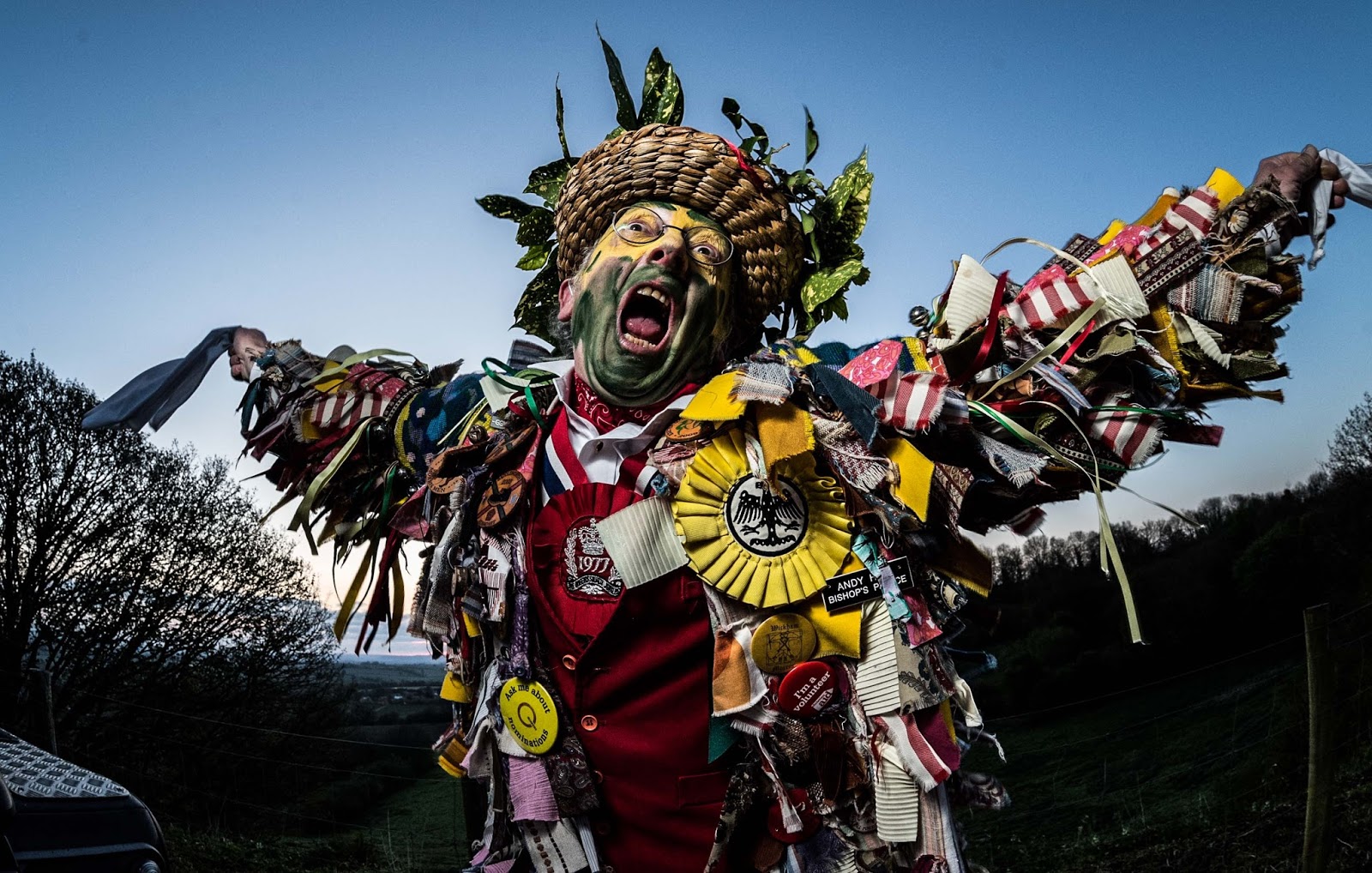 May Day traditions include bathing one’s face in May morning dew to restore or retain a youthful appearance; young people cutting twigs from flowering May (i.e. Hawthorn) trees and using them as ‘May gads’ to lightly whip other young persons, particularly those they are attracted to; lighting pairs of fires between which domestic animals are driven to purify and protect them through the coming year; dancing, especially
 Most of these events are happy to have Druids simply turn up and take part as spectators. If you’d like to be more actively involved, you could contact the organisers and see if they’re amenable to having some Druidic input. Personally, I’ve been happy just to join in with the other drummers who attend the Jack-in-the-Green Festival in Hastings. In the 1990s, Tim Sebastion, late founder of the Secular Order of Druids, researched a local celebration in Frome that had died out and revived it with support from the town council, mayor and local traders. It’s still running as an annual event. Or you could join a Morris team. There are now a number of Pagan Morris sides in the UK. Many of them dress and dance in the ‘Border Morris’ style. Some weave dances into folk dramas depicting historical and/or legendary events. All are hugely entertaining and fun to hang out with. All eagerly welcome new recruits, whether dancers, musicians, or both.
 If you want something with a more specifically Druidic focus, there are groups who hold open rites at various sacred sites including the


 The build took about a year and a half, working during school holidays. Many folk came to help, from visiting individuals to entire Druid camps. John Letts, who pointed me to the one remaining source for long-straw wheat seed in the UK, turned out to be an expert in medieval thatching techniques. With wonderful generosity, he taught us how to thatch.
 roundhouse and the lead ritualists before the later arrival of larger groups for the main ceremony. If you're intrigued by these small ceremonial snippets, check out the
  I love books. It's been a dream of mine since I was a kid to see my name on the spine of a really nicely produced hardback book. Well, it took a while, but I finally made it! The first edition of Druidry: A Practical & Inspirational Guide was a modest little paperback that came out in 2000 (above left). Despite being written as an introductory book, I was delighted to hear that even old hands in the Pagan and Druid worlds had found inspiration in it. It's also been a joy to run into those for whom it was their first introduction to Druidry and who were inspired to follow it as a path ever since.
 23 years on, the new edition is more than twice the length of the first and is a rather beautiful 6 x 9 inch hardback, bound in dark blue cloth with gold lettering on the spine, enclosed in a tough wraparound jacket bearing a gorgeous photo of yours truly on the front, courtesy of ace Druid photographer,
  introduction to Druidry and how the modern tradition came to exist in its current form. Subsequent sections cover the bardic, ovate and Druid paths in more detail, covering (among other things) myths, legends and poetry, seership and divination, seasonal celebrations, ritual and shape-shifting.
